If you’ve ever wondered how does central heating and cooling work to keep your home comfortable all year long, you’re not alone. Many homeowners in North Carolina rely on these systems daily but aren’t entirely sure what happens behind the scenes. Understanding how your central HVAC system operates can help you make smarter decisions about maintenance, energy efficiency, and home comfort. At Brunswick Isles HVAC LLC, we’re here to explain everything you need to know about how central heating and cooling systems function and how they can make a difference in your Shallotte home.
What Is a Central Heating and Cooling System?
A central heating and cooling system is designed to regulate the temperature of your entire home through one integrated system. Instead of using individual air conditioners or space heaters in each room, a central HVAC system distributes warm or cool air throughout your house using a network of ducts and vents.
This setup not only ensures consistent temperatures in every room but also improves indoor air quality and energy efficiency when maintained properly. Central systems are made up of several key components working together — including the furnace, air conditioner, heat pump, ductwork, and thermostat.
The Main Components of a Central HVAC System
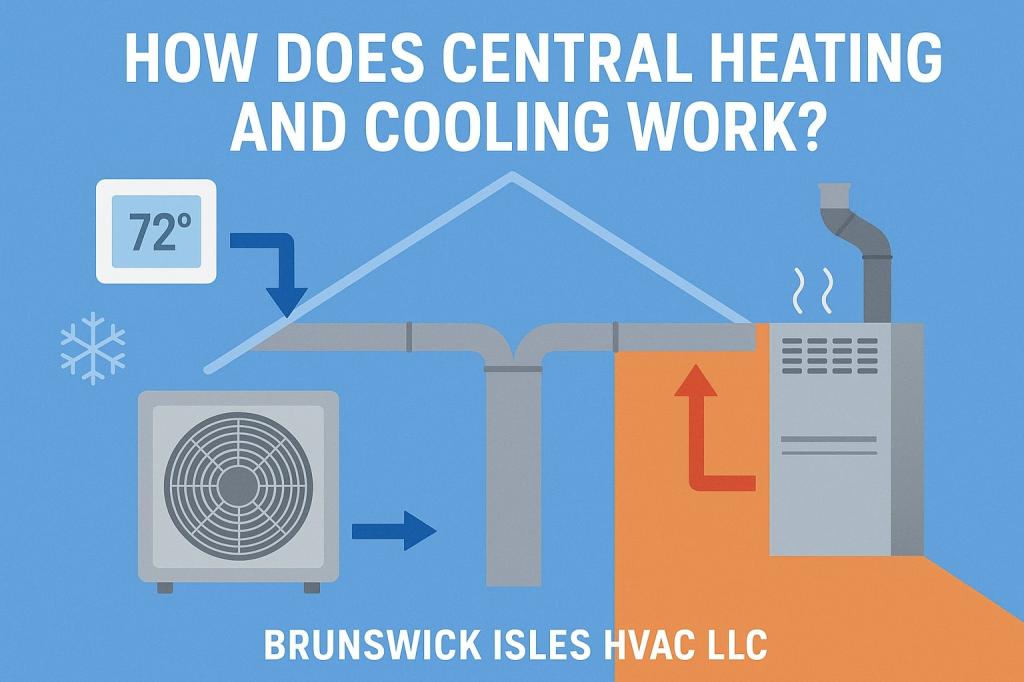
To understand how central heating and cooling work, it helps to break down the system into its core parts:
1. Thermostat
The thermostat acts as the command center of your HVAC system. You set your desired temperature, and the thermostat communicates with your heating or cooling unit to turn it on or off as needed. Modern smart thermostats can even “learn” your preferences and automatically adjust to optimize comfort and efficiency.
2. Furnace or Air Handler
In a central heating system, the furnace is responsible for generating heat. It burns fuel (natural gas, oil, or propane) or uses electricity to create warmth. That warm air is then pushed through ducts and vents to heat your home evenly.
In homes with heat pumps instead of traditional furnaces, the air handler distributes warm or cool air depending on the season.
3. Air Conditioner or Heat Pump
The cooling process is handled by either an air conditioner or a heat pump. Both systems work by removing heat from the indoor air and transferring it outside, leaving your home cool and comfortable.
A heat pump can perform both heating and cooling functions, making it a versatile choice for areas like Shallotte, where winters are mild and summers are warm.
4. Ductwork
Ducts are the network of metal or flexible tubes that deliver conditioned air throughout your home. They’re essential for ensuring even airflow, and any leaks or blockages can drastically reduce efficiency.
5. Vents and Returns
Supply vents release warm or cool air into each room, while return vents draw stale air back into the system to be filtered and reconditioned. This continuous loop ensures your indoor environment stays balanced and comfortable.
How Central Heating Works
When you turn up the thermostat in the winter, your HVAC system begins a process that warms your entire home efficiently:
- Thermostat Activation: The thermostat detects that the indoor temperature has dropped below your desired setting.
- Furnace Ignition: If your home uses a gas furnace, the burners ignite, and heat is transferred to the air through a metal heat exchanger. For electric systems, heating elements warm the air directly.
- Air Distribution: A blower fan pushes the warm air through the ductwork and out of supply vents in each room.
- Air Circulation: As the warm air rises and cools, it’s drawn back into the return vents to repeat the process.
This continuous circulation maintains even temperatures throughout your home. Regular maintenance—like cleaning filters and inspecting ducts—helps ensure your heating system runs safely and efficiently.
How Central Cooling Works
The cooling process is essentially the reverse of heating. When your home gets too warm, the thermostat activates the air conditioner or heat pump, and the system begins removing heat from the indoor air:
- Thermostat Signal: The thermostat senses that the temperature is above your set point and sends a signal to start the cooling process.
- Heat Absorption: The refrigerant in the evaporator coil absorbs heat from indoor air. The warm air passes over the coil, and the refrigerant turns from a liquid into a gas as it absorbs heat.
- Heat Release: The gaseous refrigerant travels to the outdoor condenser unit, where it releases the heat into the outside air and returns to a liquid state.
- Cool Air Circulation: The blower fan pushes the newly cooled air back through your ducts and vents into each room.
- Cycle Repeats: This process continues until your home reaches the desired temperature.
The result is cool, refreshing air circulating throughout your house, keeping you comfortable even on hot summer days.
The Role of Air Filters and Ventilation
An often-overlooked part of how central heating and cooling work is air filtration and ventilation. As your system circulates air, filters capture dust, pollen, and other particles. This improves indoor air quality and prevents buildup on HVAC components, which can reduce efficiency and cause breakdowns.
Over time, these filters become clogged and need to be replaced. Brunswick Isles HVAC LLC recommends checking your filters every month and replacing them at least every 1–3 months, depending on your system and household needs.
Ventilation is also key to maintaining a healthy home environment. A well-ventilated HVAC system ensures stale indoor air is replaced with fresh outdoor air, reducing humidity and preventing musty odors.
Energy Efficiency and Zoning
Modern central HVAC systems are far more energy-efficient than older models. Features like variable-speed blowers, programmable thermostats, and ENERGY STAR®-rated equipment help you save money on your energy bills.
Additionally, zoning systems allow homeowners to divide their home into separate temperature zones. Each zone has its own thermostat, meaning you can heat or cool specific areas without wasting energy on unoccupied rooms. This feature is especially useful in multi-story homes or large properties in Shallotte.
Common Issues with Central HVAC Systems
While central heating and cooling systems are highly reliable, occasional issues can arise, especially if the system isn’t regularly maintained. Common problems include:
- Dirty air filters that restrict airflow and reduce efficiency.
- Leaky ducts that waste energy and cause uneven temperatures.
- Low refrigerant levels that hinder cooling performance.
- Thermostat malfunctions that cause incorrect temperature readings.
- Blower motor failures that disrupt air circulation.
Routine professional inspections from Brunswick Isles HVAC LLC can help prevent these problems before they escalate into costly repairs.
Why Proper Maintenance Matters
Routine maintenance is crucial for keeping your central heating and cooling system running smoothly. Preventative maintenance helps extend the life of your system, improve efficiency, and ensure your home stays comfortable throughout the year.
Regular maintenance tasks include:
- Cleaning or replacing air filters.
- Checking refrigerant levels.
- Inspecting ductwork for leaks.
- Lubricating moving parts.
- Testing thermostat calibration.
- Ensuring safe furnace ignition and airflow.
At Brunswick Isles HVAC LLC, we offer comprehensive maintenance plans designed to help homeowners in Shallotte get the most out of their heating and cooling systems.
Final Thoughts
Understanding how does central heating and cooling work helps you appreciate the technology that keeps your home comfortable through every season. Whether you use a furnace, air conditioner, or heat pump, your system depends on a delicate balance of components working together efficiently.
For reliable installation, maintenance, or repairs, trust Brunswick Isles HVAC LLC — your local heating and cooling experts in Shallotte, NC. Our team is dedicated to keeping your system in top shape so you can enjoy consistent comfort, lower energy costs, and peace of mind year-round.